Understanding the Properties and Behavior of Building Materials in Fire Scenarios
- DAGBO CORP
- Jun 1
- 4 min read

Fire safety in buildings depends heavily on how materials react when exposed to heat and flames. Knowing the properties and behavior of building materials during a fire helps architects, engineers, and safety professionals design safer structures and choose the right materials to reduce fire risks. This article explores key characteristics of common building materials, how they behave in fire, and practical examples that highlight their importance in fire safety.
How Fire Affects Building Materials
Fire exposes materials to extreme heat, causing physical and chemical changes. These changes determine whether a material will burn, melt, crack, or remain stable. The main factors influencing material behavior in fire include:
Ignitability: How easily a material catches fire.
Flammability: How fast and intensely it burns.
Heat resistance: Ability to withstand high temperatures without losing strength.
Smoke production: Amount and toxicity of smoke released.
Structural integrity: Whether the material maintains its load-bearing capacity during fire.
Understanding these factors helps in selecting materials that slow fire spread, reduce smoke hazards, and maintain building stability long enough for evacuation and firefighting.
Common Building Materials and Their Fire Behavior
Wood
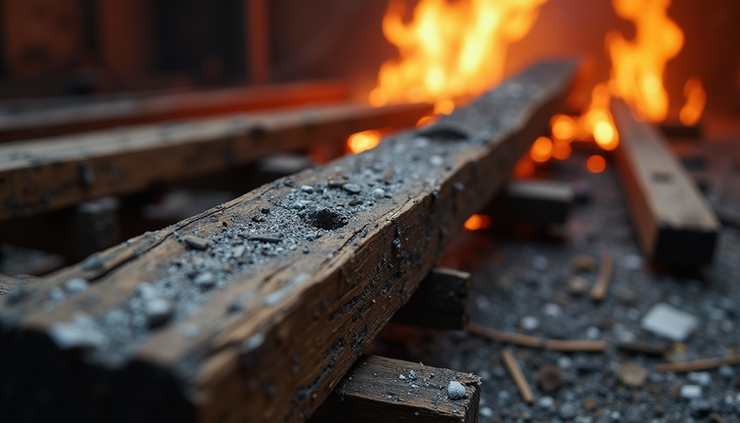
Wood is a natural, organic material widely used in construction. It is combustible and ignites relatively easily. However, wood chars on the surface when exposed to fire, which can slow down further burning and protect the inner core for some time.
Ignition temperature: Around 300°C (572°F).
Behavior: Surface charring forms a protective layer, but prolonged exposure weakens the structure.
Smoke: Produces dense, dark smoke with toxic gases like carbon monoxide.
Example: Timber-framed buildings can survive moderate fires if the char layer remains intact, but intense fires can cause collapse.
Steel
Steel is a non-combustible metal commonly used for structural frames. It does not burn but loses strength rapidly when heated.
Melting point: Around 1370°C (2500°F).
Behavior: Steel softens and can deform at temperatures as low as 500°C (932°F), risking structural failure.
Smoke: Does not produce smoke.
Example: Steel beams in high-rise buildings require fireproof coatings or insulation to maintain strength during fire.
Concrete
Concrete is a composite material made of cement, aggregates, and water. It is non-combustible and has good fire resistance.
Behavior: Resists fire well but can crack or spall under rapid heating due to moisture inside.
Smoke: Does not produce smoke.
Example: Concrete walls and floors often act as fire barriers, slowing fire spread between compartments.
Gypsum Board (Drywall)
Gypsum board contains chemically bound water that absorbs heat when released during fire.
Behavior: Provides fire resistance by slowing heat transfer.
Smoke: Minimal smoke production.
Example: Used as fire-rated wall and ceiling assemblies to protect structural elements.
Insulation Materials
Insulation varies widely in fire behavior depending on type:
Mineral wool: Non-combustible, excellent fire resistance.
Foam plastics: Can be highly flammable and produce toxic smoke unless treated with fire retardants.
Example: Mineral wool insulation is preferred in fire-rated assemblies, while foam insulation requires careful selection and protection.
Fire Testing and Standards for Building Materials
Building materials undergo standardized fire tests to measure their performance. Common tests include:
Ignition test: Measures how easily a material ignites.
Flame spread test: Assesses how quickly flames travel across a surface.
Fire resistance test: Determines how long a material or assembly can withstand fire exposure while maintaining structural integrity.
Smoke density test: Evaluates smoke production and toxicity.
Materials are classified based on these tests to guide their use in construction. For example, fire-rated doors and walls must meet minimum fire resistance times, such as 1 or 2 hours.
Practical Considerations for Fire-Safe Material Selection
Choosing the right materials depends on the building type, occupancy, and fire risk. Some key points include:
Use non-combustible materials like concrete and steel for structural elements.
Protect steel with fire-resistant coatings or encasements.
Incorporate fire-rated gypsum board in walls and ceilings.
Avoid or properly treat combustible insulation materials.
Consider smoke production and toxicity, especially in residential or public buildings.
Use materials that maintain structural integrity long enough for safe evacuation.
Real-World Examples of Material Behavior in Fires
Grenfell Tower Fire (2017)
The tragic Grenfell Tower fire in London highlighted the dangers of combustible cladding materials. The exterior cladding panels were made of aluminum composite material with a polyethylene core, which is highly flammable. The fire spread rapidly on the building’s exterior, causing extensive damage and loss of life. This event emphasized the need for strict regulations on cladding materials and their fire properties.
Notre-Dame Cathedral Fire (2019)
The fire at Notre-Dame Cathedral in Paris showed how wood, despite being combustible, can sometimes resist fire due to charring. The wooden roof structure burned intensely, but the stone walls and vaults remained largely intact. This example illustrates the importance of combining materials with different fire behaviors to protect historic buildings.
Summary of Key Material Properties in Fire
| Material | Ignition Temperature | Fire Behavior | Smoke Production | Structural Impact in Fire |
|----------------|----------------------|----------------------------------|-------------------------|-----------------------------------|
| Wood | ~300°C | Burns, chars surface | High, toxic | Weakens, risk of collapse |
| Steel | Does not ignite | Softens, deforms at ~500°C | None | Loses strength, needs protection |
| Concrete | Does not ignite | Resists fire, may crack/spall | None | Maintains structural integrity |
| Gypsum Board | Does not ignite | Absorbs heat, slows fire spread | Minimal | Protects underlying materials |
| Mineral Wool | Does not ignite | Non-combustible, fire resistant | None | Maintains insulation properties |
| Foam Plastics | Low ignition temp | Burns rapidly unless treated | High, toxic | Can contribute to fire spread |
How to Improve Fire Safety with Material Choices
Combine materials to balance strength and fire resistance.
Use fire retardants and coatings to enhance combustible materials.
Design fire barriers and compartmentalization using fire-resistant assemblies.
Regularly inspect and maintain fire protection systems.
Follow building codes and standards for fire safety.
Understanding how materials behave in fire helps create safer buildings that protect lives and property. Selecting the right materials and applying fire protection measures can significantly reduce fire hazards.


Comments