Understanding the Key Steps in Structural Steel Product Fabrication
- DAGBO CORP
- Mar 18
- 3 min read

Structural steel product fabrication plays a crucial role in modern construction and manufacturing. It involves transforming raw steel into precise components that form the backbone of buildings, bridges, and industrial equipment. Knowing the key steps in this process helps engineers, contractors, and project managers ensure quality, safety, and efficiency in their projects.
Steel fabrication is a complex process that requires careful planning, skilled labor, and specialized equipment. This post breaks down the essential stages of structural steel fabrication, highlighting practical details and examples that clarify how raw steel becomes a finished product ready for installation.
Material Selection and Preparation
The first step in structural steel fabrication is selecting the right type of steel. Different projects require different grades and shapes of steel, such as I-beams, channels, or plates. The choice depends on factors like load requirements, environmental conditions, and design specifications.
Once the steel arrives at the fabrication shop, it undergoes preparation:
Inspection to check for defects or damage
Cutting into required lengths using saws, torches, or automated cutting machines
Cleaning to remove rust, oil, or mill scale, ensuring better weld quality
For example, a bridge project might specify ASTM A709 steel for its high strength and corrosion resistance. The fabricator will verify the steel grade and prepare it accordingly before moving to the next stage.
Cutting and Shaping
Cutting and shaping steel components accurately is vital for proper fit and structural integrity. Fabricators use various methods depending on the material thickness and complexity:
Plasma cutting for fast, precise cuts on thick steel plates
Oxy-fuel cutting for heavy sections where speed is less critical
Shearing for straight cuts on thinner sheets
Press braking to bend steel into angles or curves
Computer Numerical Control (CNC) machines often guide these processes, ensuring repeatability and tight tolerances. For example, CNC plasma cutters can produce intricate shapes needed for architectural steelwork with minimal manual intervention.
Welding and Assembly
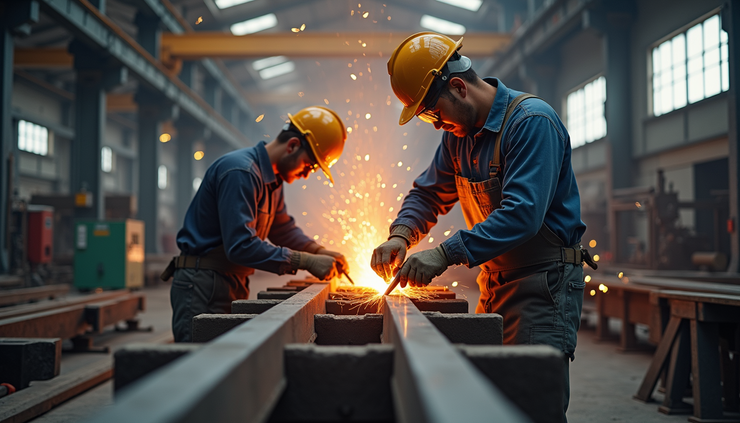
Welding joins steel parts to form larger assemblies. This step requires skilled welders who follow strict procedures to maintain strength and safety. Common welding techniques include:
Shielded Metal Arc Welding (SMAW) for general fabrication
Gas Metal Arc Welding (GMAW) for faster, cleaner welds
Flux-Cored Arc Welding (FCAW) for thicker materials or outdoor work
Before welding, fabricators align parts using jigs or fixtures to ensure accuracy. After welding, they inspect the joints visually and with non-destructive testing methods like ultrasonic or magnetic particle inspection to detect flaws.
Assembly may also involve bolting or riveting, especially when parts need to be disassembled later or when welding is not feasible.
Surface Treatment and Finishing
After assembly, steel products often require surface treatment to protect against corrosion and improve appearance. Common treatments include:
Sandblasting to remove mill scale and prepare the surface
Priming and painting with protective coatings tailored to the environment
Galvanizing by dipping steel in molten zinc for long-term rust resistance
For instance, structural steel used in outdoor bridges typically receives hot-dip galvanizing to withstand weather exposure for decades.
Finishing also involves adding any necessary holes, slots, or markings for installation. These details ensure the steel components fit perfectly on site and meet project specifications.
Quality Control and Testing
Quality control is critical throughout fabrication. Fabricators maintain detailed records and perform tests to verify dimensions, weld quality, and material properties. Some common quality checks include:
Dimensional inspections using measuring tools or laser scanners
Weld inspections with X-rays or ultrasonic testing
Mechanical testing of sample welds for strength and toughness
Meeting industry standards such as those from the American Institute of Steel Construction (AISC) or the International Organization for Standardization (ISO) ensures the fabricated steel meets safety and performance requirements.
Packaging and Delivery
The final step involves preparing the fabricated steel for transport to the construction site. Proper packaging prevents damage during handling and shipping. Fabricators may:
Bundle steel components securely
Use protective coatings or coverings
Label parts clearly for easy identification during installation
Timely delivery and clear communication with contractors help avoid delays and ensure smooth project progress.


Comments