Understanding the Impact of Pile Driving on Sensitive Clay Soil Disturbance
- DAGBO CORP
- Apr 30
- 4 min read

Pile driving is a common foundation technique used in construction projects to support structures by driving long columns deep into the ground. While effective in many soil types, this method poses unique challenges when applied to sensitive clay soils. These soils are prone to disturbance, which can affect the stability of the foundation and the surrounding environment. This article explores how pile driving impacts sensitive clay, the mechanisms behind soil disturbance, and practical approaches to minimize damage.
What Makes Sensitive Clay Different?
Sensitive clay is a type of soft clay that loses strength dramatically when disturbed. It often forms in marine or glacial environments and contains a delicate structure of clay particles bound by weak bonds. When this structure is disrupted, the soil can behave almost like a liquid, a phenomenon known as soil sensitivity or quick clay behavior.
Key characteristics of sensitive clay include:
High water content
Low shear strength in disturbed state
Potential for sudden failure under stress
Slow natural consolidation
Because of these properties, any construction activity that disturbs the soil, such as pile driving, must be carefully managed to avoid triggering instability.
How Pile Driving Disturbs Sensitive Clay
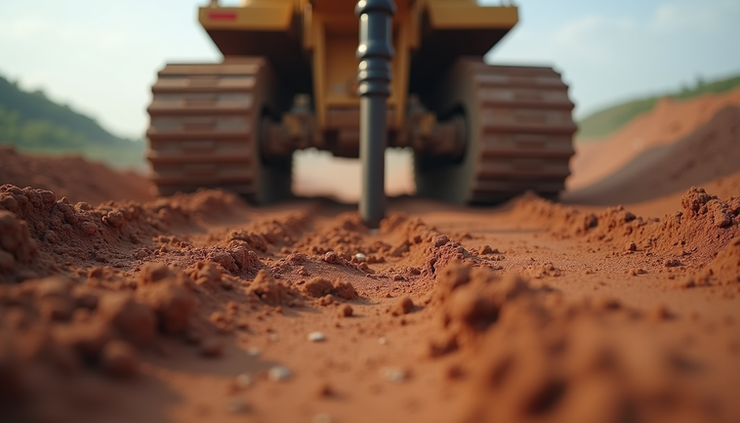
Pile driving involves hammering or vibrating piles into the ground to reach a stable layer. This process generates vibrations and displaces soil around the pile shaft. In sensitive clay, these effects can cause:
Soil structure breakdown: The impact forces break the delicate bonds between clay particles.
Excess pore water pressure: Rapid displacement increases water pressure in the soil pores, reducing effective stress and strength.
Soil remolding: The soil near the pile becomes remolded, losing its original strength and stiffness.
Lateral soil movement: The soil may move sideways, affecting nearby structures or utilities.
The extent of disturbance depends on factors such as pile type, driving method, soil properties, and depth.
Types of Piles and Their Effects on Sensitive Clay
Different pile types interact with sensitive clay in distinct ways:
Driven steel or concrete piles: These piles are hammered into the soil, causing significant vibrations and soil displacement. The impact can lead to extensive remolding of sensitive clay.
Vibratory driven piles: These use vibration to reduce soil resistance but can still generate excess pore pressures and disturb the soil structure.
Bored or drilled piles: These piles are installed by removing soil to create a hole before placing the pile. This method causes less vibration but can still disturb the soil through excavation and slurry use.
Choosing the right pile type and installation method is critical to reducing soil disturbance.
Measuring and Monitoring Soil Disturbance
Engineers use several techniques to assess the impact of pile driving on sensitive clay:
Cone Penetration Test (CPT): Measures soil resistance before and after pile installation to detect changes in soil strength.
Pore pressure sensors: Monitor excess water pressure generated during driving.
Seismic and vibration monitoring: Track the intensity of vibrations transmitted through the soil.
Settlement monitoring: Observes ground surface movement to detect soil deformation.
These tools help identify the extent of disturbance and guide adjustments in construction methods.
Strategies to Minimize Soil Disturbance
Several approaches can reduce the negative effects of pile driving in sensitive clay:
Pre-drilling or pre-augering: Creating a pilot hole before driving reduces soil resistance and vibrations.
Using displacement piles: These piles push soil aside rather than removing it, minimizing disturbance.
Controlling hammer energy: Using lower energy or vibratory hammers reduces impact forces.
Installing piles slowly: Slower driving speeds allow pore pressures to dissipate.
Ground improvement techniques: Methods such as soil mixing or grouting can strengthen clay before pile installation.
Selecting alternative foundation methods: In some cases, shallow foundations or floating piles may be more suitable.
Each project requires a tailored approach based on site conditions and engineering requirements.
Case Study: Pile Driving in Sensitive Clay at a Coastal Site
A coastal infrastructure project faced challenges due to a thick layer of sensitive marine clay. Initial pile driving attempts caused excessive soil remolding and settlement, threatening nearby structures. The engineering team implemented the following measures:
Pre-drilled pilot holes to reduce soil resistance
Used displacement piles with vibratory hammers at controlled energy levels
Installed pore pressure sensors to monitor soil response in real time
Applied ground improvement through jet grouting in critical zones
These steps successfully minimized soil disturbance, maintained foundation stability, and prevented damage to adjacent areas.
Environmental and Safety Considerations
Disturbing sensitive clay can have environmental impacts such as:
Increased turbidity in nearby water bodies
Release of trapped contaminants
Groundwater flow changes
Safety risks include sudden soil failure or settlement that endangers workers and structures. Proper planning, monitoring, and mitigation are essential to protect both the environment and human safety.
Summary of Key Points
Sensitive clay loses strength when disturbed, making pile driving risky.
Vibrations and soil displacement during pile driving cause soil structure breakdown and excess pore pressure.
Different pile types and installation methods affect the level of disturbance.
Monitoring tools help assess soil response and guide construction.
Techniques like pre-drilling, controlled hammering, and ground improvement reduce soil disturbance.
Real-world projects demonstrate the importance of adapting methods to site conditions.
Environmental and safety risks require careful management.


Comments