Understanding Site-Structure Interaction in Geomechanics for Better Design Outcomes
- DAGBO CORP
- Feb 17
- 3 min read

Site-structure interaction plays a crucial role in geomechanics, influencing how structures behave under various loads and environmental conditions. Ignoring this interaction can lead to unexpected failures or costly overdesign. This article explores the fundamentals of site-structure interaction, its impact on engineering projects, and practical approaches to incorporate it into design for safer, more efficient outcomes.
What Is Site-Structure Interaction?
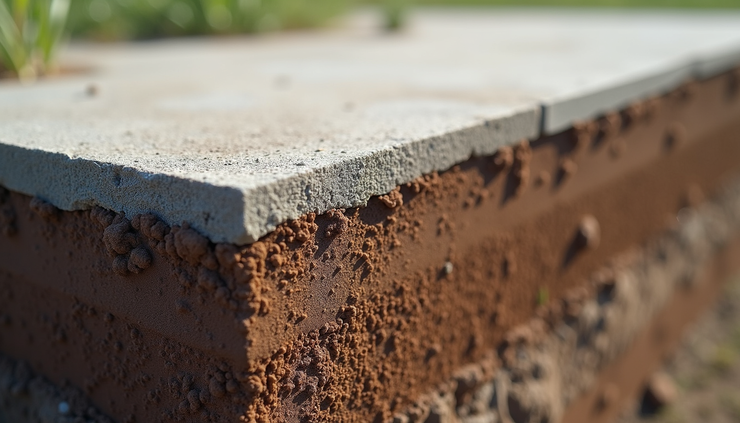
Site-structure interaction refers to the mutual influence between a structure and the ground it rests on. When a structure is subjected to loads—such as weight, wind, or seismic forces—the soil beneath responds by deforming. This deformation, in turn, affects the structure’s behavior. Unlike traditional design methods that treat soil and structure separately, site-structure interaction considers this two-way relationship.
This interaction is especially important in geomechanics because soil properties vary widely and can change under load. Factors such as soil stiffness, layering, water content, and density all affect how forces transfer between the ground and the structure.
Why Site-Structure Interaction Matters
Ignoring site-structure interaction can lead to inaccurate predictions of structural performance. For example:
Foundation settlement may be underestimated, causing uneven support and structural damage.
Seismic response can be amplified or reduced depending on soil-structure dynamics, affecting building safety.
Load distribution may shift, leading to unexpected stress concentrations.
Incorporating site-structure interaction helps engineers design foundations and structures that better accommodate real-world conditions. This leads to safer buildings, optimized material use, and cost savings.
Key Factors Influencing Site-Structure Interaction
Several factors determine the extent and nature of site-structure interaction:
Soil Type and Properties
Clay, sand, silt, and rock all behave differently under load. For instance, clay tends to deform slowly and retain water, while sand drains quickly but may shift under stress.
Foundation Type
Shallow foundations like spread footings interact differently with soil compared to deep foundations such as piles or caissons.
Structural Characteristics
The weight, stiffness, and shape of the structure influence how loads transfer to the soil.
Loading Conditions
Static loads (e.g., building weight) and dynamic loads (e.g., earthquakes, wind) affect soil-structure interaction differently.
Groundwater Conditions
Water pressure within soil pores can reduce soil strength and alter interaction behavior.
Practical Approaches to Analyze Site-Structure Interaction
Engineers use several methods to account for site-structure interaction during design:
1. Soil-Structure Modeling
Numerical models simulate the interaction between soil and structure. Common approaches include:
Finite Element Method (FEM)
Models both soil and structure as interconnected elements, capturing complex behaviors.
Boundary Element Method (BEM)
Focuses on soil boundaries, reducing computational effort for certain problems.
Spring Models
Represent soil as springs with stiffness values, simplifying calculations for foundation design.
2. Site Investigation and Testing
Accurate soil data is essential. Engineers conduct:
Borehole drilling to collect soil samples.
Standard Penetration Tests (SPT) and Cone Penetration Tests (CPT) to assess soil strength.
Laboratory tests to determine soil properties like shear strength and compressibility.
3. Dynamic Analysis for Earthquake Engineering
Seismic design requires understanding how soil amplifies or dampens ground motion. Engineers perform:
Response spectrum analysis to estimate structural response.
Time-history analysis using recorded or simulated earthquake data.
Soil liquefaction assessment to evaluate risk of soil losing strength during shaking.
Examples of Site-Structure Interaction in Practice
Case Study: High-Rise Building on Soft Clay
A 30-story building was planned on a site with deep soft clay layers. Initial designs ignored soil-structure interaction, leading to concerns about excessive settlement. After detailed modeling including interaction effects, engineers redesigned the foundation using deep piles reaching firmer soil layers. This approach reduced settlement risk and improved structural stability.
Case Study: Bridge Foundation in Seismic Zone
A bridge foundation in an earthquake-prone area required dynamic analysis of soil-structure interaction. Engineers used finite element modeling to simulate soil behavior during seismic events. The results showed potential amplification of ground motion at the site, prompting the design of base isolators to protect the structure.
Benefits of Considering Site-Structure Interaction
Improved Safety
Designs better reflect actual behavior under loads, reducing failure risk.
Cost Efficiency
Avoids overdesign by accurately predicting soil and structural responses.
Optimized Foundation Design
Enables selection of appropriate foundation types and depths.
Enhanced Performance in Seismic Areas
Helps mitigate earthquake damage through informed design choices.
Challenges and Limitations
While site-structure interaction analysis offers many benefits, it also presents challenges:
Complexity
Modeling requires detailed soil data and advanced computational tools.
Uncertainty
Soil properties can vary widely even within a small site, making predictions less certain.
Time and Cost
Thorough site investigation and modeling increase project timelines and budgets.
Despite these challenges, the advantages often outweigh the costs, especially for critical or large-scale projects.


Comments